Hit job – web style

This is a familiar enough story (Via SF Gate)…And the people hit have few avenues for relief:

The first postings appeared soon after Sue Scheff, who runs a Web-based referral service for parents with troubled teenagers, advised a woman from Louisiana to withdraw her twin sons from a boarding school in 2002. Scheff is “a con artist,” “a crook” and “a fraud,” according to the messages, which peppered blogs and Internet forums for parents of troubled teens.

Soon, calls to Scheff’s Parents Universal Resource Experts dropped by half, said Scheff, 45, who lives in Weston, Fla. “People would say: ‘You know, I just read this about you online. How do I know I can trust you?’ ”

Scheff, whose 6-year-old service usually draws a lot of traffic, is a victim of an emerging phenomenon: online smear campaigns, which can wreak havoc in the victims’ professional and business lives at the touch of a few keystrokes.

We need an identity and reputation infrastructure that puts all opinions, expressed by all people, in perspective based on what they have done in the past. Such a system will help online communities maintain decorum by penalizing participants who don’t add value to the discussion (much like discussions in real community) and rewarding those who do…This is quickly emerging as an important requirement for wider adoption of social media…

Who participates in social media?

An interesting post from Bruce Nussbaum at his blog on BusinessWeek. I am summarzing the main data points below (the data is based on a study by Bill Tancer, an analyst with Hitwise, which measures Web 2.0 audiences):

istock_000002047538xsmall.jpg

  • Only a tiny fraction of people using social media actively participate.
  • 0.16 percent of visits to YouTube actually involve people putting a video up on it, according to his online surfing data. All the rest are visits by people watching the videos of that tiny fraction.
  • 0.2% of visits to Flickr are to upload new photos. Again, everyone else is watching.
  • Wikipedia shows much higher active partipation–4.6% of all visits are for editing. But think a moment–that is still a very small fraction of the total number of people using Wikipedia.
  • Visits to Web 2.0 sites constitute 12% of all web activity, according to Tancer, up from 2% two years ago. It’s soaring.

From Bruce’s blog:

So, the question is–who is shaping the conversation? These numbers suggest that only a very, very small number of people actively create content in social media. Nearly everyone watches.

So are we really just reinventing TV, with folks pretty much sitting back passively (like couch potatoes)? Is YouTube just another NBC or Fox TV network?

Could be. These YouTube and Flickr numbers are even worse than the 1% Rule–for every 100 users of social media, only ten actively participate, and only 1 actually creates something. Back in July, 2006, the ratio of creators to consumers on YouTube was 0.5%. Now it is 0.16%. Many more people are drawn to YouTube to watch than to create.

To be honest, the biggest surprise for me in these numbers is the Wikipedia number…4.6% users edit…Wow!!!. I am not sure its fair to use these numbers to discount the 90-9-1 rule of participation in social media. I think some of the specific participation numbers are skewed because of the type of media we are talking about(I think 90-9-1 rule writers had text content in mind)…Video is a lot harder to produce then to watch…same thing for pictures but probably to a lesser extent.

At the end of the day, the lack of participation reflects the lack of incentives to participate. While the ego benefits of creating a popular video are huge, the changes of doing so are fairly minimal and the skills/time required are pretty significant. For the text based context, like comments, social bookmarks or bulletin boards, its hard to prove ones identity and because of that its really hard to establish the benefits of participation. The result…90-9-1 rule.

What do you think?

Who benefits from open source?

Fascinating piece from Nick Carr where he refers to a study by Dirk Riehle, a researcher with SAP, on the subject on open source software. Besides the obvious conflict of interest, the piece raises some interesting questions.

A new article in IEEE Computer, “The Economic Motivation of Open Source Software: Stakeholder Perspectives,” sheds some interesting new light on an old question: Is open source software development good or bad for programmers?

The author of the IEEE Computer article, Dirk Riehle, a researcher with SAP, doesn’t look at that question directly. Rather, he examines, in a theoretical way, how open source changes the economics of the IT markets in which programmers participate. He first looks at why big systems integrators and other “solutions” providers, like IBM, have been promoting open source. He argues that these companies, which sell bundles of products and services to their clients, like open source because it allows them to reduce the amount of money they have to pay to software vendors without requiring that they pass along the savings to customers in the form of lower prices. In other words, the software savings turn into additional services profits, which fall to the solutions providers’ bottom lines. Ultimately, that means that open-source software developers are subsidizing the big solution providers at their own expense. Writes Riehle: “If it were up to the system integrators, all software would be free (unless they had a major stake in a particular component). Then, all software license revenue would become services revenue.” (I would think it’s an overstatement to say that all software license revenue turns into services revenue; assuming there’s competition between solutions providers, some of the savings would go to the customers.)

Riehle also looks at the economic effect of open source on software markets themselves. He argues that, by tearing down the barriers to entry in software markets (by obviating the huge up-front investments required to create a proprietary program), open source spurs competition, which in turn reduces prices and erodes the profits of software vendors. Riehle writes: “Customers love this situation because prices are substantially lower than in the closed source situation. System integrators love the situation even more because they can squeeze out proprietary closed source software.” For the programmers themselves, however, much of the savings reaped by customers and added profits taken in by integrators comes out of their own pockets.

Riehle also notes that open source (because of its openness) tends to diffuse knowledge of particular programs among a much broader set of programmers. That will tend to increase competition among the programmers and hence depress their pay: “Technical skills around the open source product are a key part of determining an employee’s value to a [vendor]. Anyone who’s smart enough can develop these skills because the open source software is available to people outside the firm. Hiring and firing becomes easier because there’s a larger labor pool to draw from, and switching costs between employees are lower compared with the closed source situation. Given the natural imbalance between employers and employees, this aspect of open source is likely to increase competition for jobs and drive down salaries.”

Its a very odd conclusion to an interesting analysis…I would have though that as open source software become popular, engineers who work on open source, can develop and sell their skills to a larger market…this makes their skill set more valuable over a longer period of time. Also the fact that open source reduces cost of the software means that more and more people will be willing to pay for people with skills with open source software…In my experience that is indeed what is happening.

Even the large enterprises seemed to have learned a lesson from the excesses of the boom times and seem reluctant to sign huge deals for proprietary software and then pay through the nose for services. In such situation the economic rent is accruing more widely and evenly to the open source engineers.

What do you think?

State of Blogosphere

The new state of the blogosphere report (its called Live Web now – interesting repositioning by Technorati) is out now…Some of the interesting takeaways from the report are:

1. The total number of blogs is increasing (we already were counting 80M). Technorati is now tracking 70M blogs. Below is how the growth curve looks and it is following kinda of the same pattern we expected.

2. While the growth rate is slowing down (law of large numbers) the influence of the blogosphere/citizen media/Live Web is increasing in a big way (22 blogs in top 100 media influencers compared to 9 last time)


3. Tagging of content is on the rise…It looks like tagsonomy is here to stay.


4. Blogosphere is becoming more global.

Net Net…Blogosphere is maturing. More people know about blogs so the kind of blog accounts where users were experimenting with starting a blog and then abandoning is slowing down and so the size is growing but more reasonably.

Update (more data from web 2.o via RWW)

David Sifry notes that influential bloggers post more frequently, on average twice a day. Whereas “magic middle” bloggers (about 3M) post on average once a day. Also influential bloggers have been at this at least 1-2 years. Finally, 88% of the top 100 is different than one year ago – i.e. it’s very fluid.


5 ways to get more comments on your blog

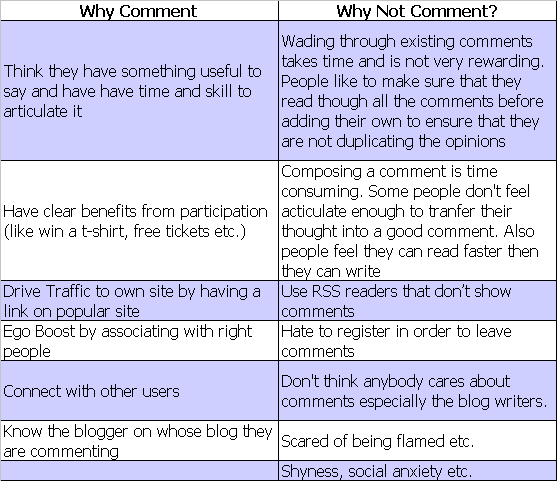
Fascinating survey post at the Freakonomics blog (Thanks Indus for pointing it out) asking users why do or why don’t they comment. (I love these guys not just because of the book or because they write intelligent/insightful stuff but also because Prof. Levitt is from my alma mater). The post generated 114 responses…Now these responses can be extrapolated to other social media as well where the participation more or less follows the same 90-9-1 kinda pattern observed on blogs. I waded through these responses and summarized them in the table below:

comment.PNG

Some of the sample comments from the article are listed below:

# Matt W

First is the fixed cost.. it just took me 3 minutes to register with WordPress and thats a long time for the internet age.

Second, usually, on a high traffic blog like this, commenters have usually taken most points of view in an hour or so.

But mostly, its just like in school where theres a class of 30 people but the same 5 or 6 are the only ones that raise their hand.

# From Deckard

I REALLY WANT OTHER PEOPLE TO READ MY BLOG AS WELL AND GET THE STATS UP – also I WANT TO LOOK IMPORTANT AND ASSOCIATE MYSELF WITH SOMEONE AS GREAT AS (INSERT NAME HERE)

Being a bit of a marketing whore with a new business to promote

# furiousball

Many bloggers comment to get comments. Many also comment to connect with people. The undying need to be loved is strong with the blogging community.

# akbal

I rarely comment on blogs because (1) written communication is a skill I have not practiced since high school (often my comments are misunderstood), (2) Ive learned that people usually ignore or attack what they dont already believe (this makes my comments seem futile), and (3) I have things I would rather be doing (it usually takes 30 minutes or more to write even a semi-coherent response to a blog.

Shyness definitely plays into my reasons.

# sbw

Commenters needed to be parsed into distinct categories. Some comment to learn to nail an idea to a page so others will refine it. Some comment to convince. Some comment for community.

Still others comment to overpower ideas with cheap rhetoric.

# jonathank

I comment on two types of blogs: people I know and where I believe the author reads the comments and might actually be looking for ideas and different takes.

I have, on rare occasion, joined in to reinforce others comments. It is fruitless to argue with people in comments – or mostly anywhere on the internet – but sometimes it can be enjoyable (and, in a rare case, even constructive) to agree with other commenters

# RobertSeattle

I actually tend to avoid blogs that dont allow comments. Not allowing for comments means the blogger really doesnt care about what their readers think. I prefer some kind of login system though because I am a firm believer in the formula:

Normal Person + Anonymity + Audience = Total Idiot

# sasha

1. I (like many readers, I suspect) read your blog through an RSS feed. So commenting involves clicking on the link to your actual site, remembering my wordpress username (which usually takes a trip to my email account where its saved), and then remembering the password Ive chosen.
2. After a while, regular commenters start to form a community. It starts to feel intrusive to insert yourself.
3. The time it takes me to formulate a comment Im happy with posting is usually not worth what Ill get out of actually posting it. Im usually picky about being concise, grammatically correct, and having fully formed ideas, so a comment can take me upwards of 30 minutes to put together. And then the comment will usually be ignored anyway.

# kentavos

Why I comment:

1. I feel passionately about the topic or I have unique insight.

2. Im in the mood and I have time.

3. I might win a t-shirt.

Why I dont comment:

1. My point of view is already represented.

2. Too many comments, Id just be lost in the sea of comments.

3. Too many passionate views, no one would really listen.

4. I dont have the time to deliver a concise and well thought out comment.

# mungojelly

Right after spending a while writing a detailed comment, I always have a nagging feeling that Ive wasted my time. If I have something important to say, why am I saying it way down at the bottom of a pile of messages, where no one will read it? If I dont have anything important to say, why am I spending time typing at all??

Heres a paradox, though: In principle I believe comments are very important, and Im offended when theyre disabled, even though I still think theyre usually a waste of space in particular. Theres some sense to that attitude, and heres my attempt to explain it: The difference between having comments and not having comments is whether you are projecting an open space or a closed space. Allowing for comments even if in practice theyre spam & junk & metooism is saying I am participating in a conversation, not a monologue; this is a two-way street.

Earlier today I saw something that was interesting but smelled like bullshit, so I glanced at the comments: Naturally the first comment was someone cutting through the bullshit & giving the real facts. Thats part of whats so nice about the internet.
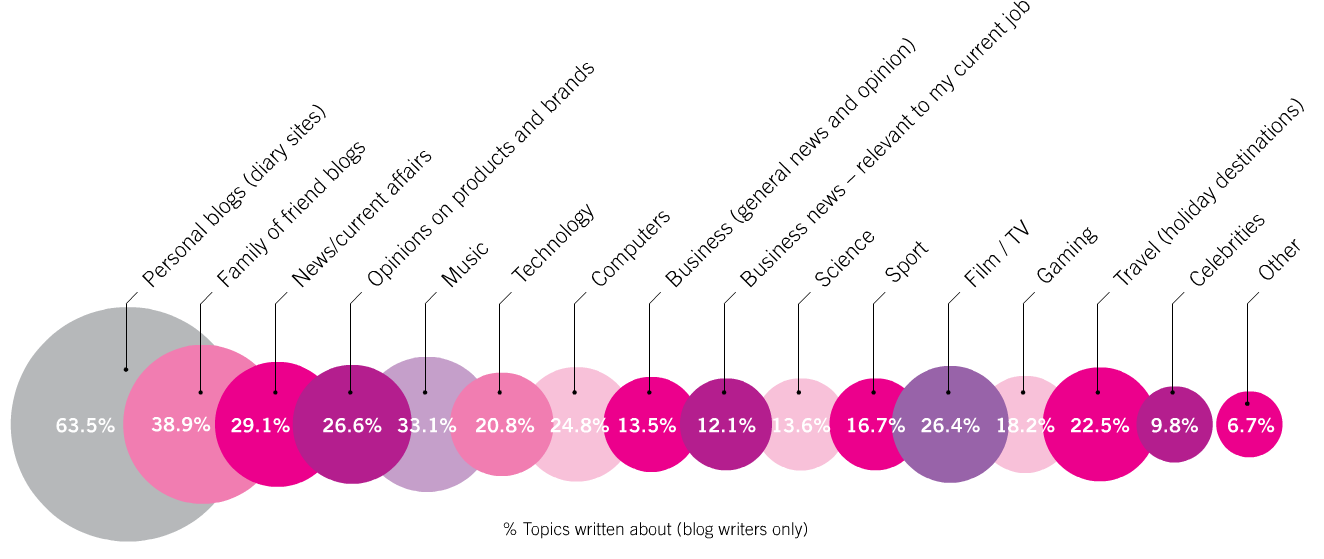
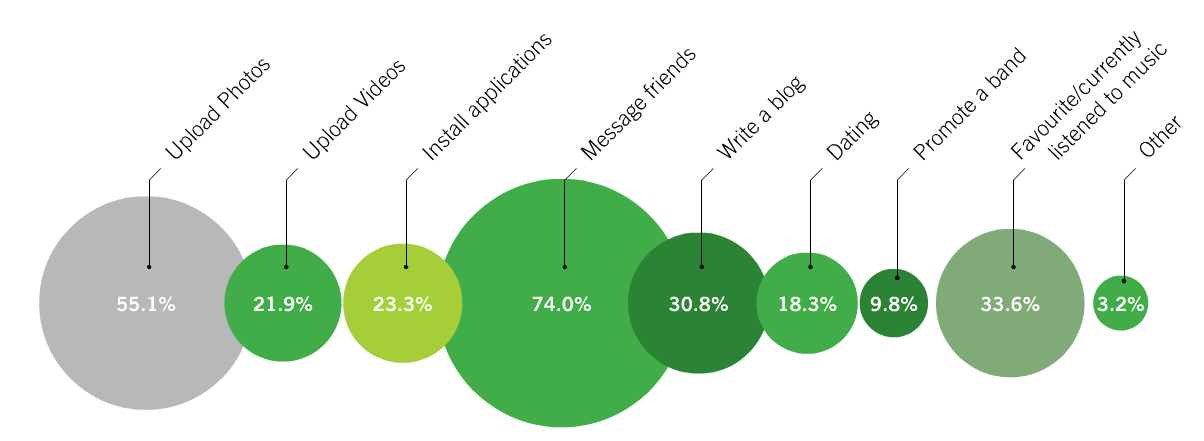
5 insights for the bloggers are:

  1. People hate sites that do not allow comments
  2. Asking people explicitly for their feedback and participating in comments is a good idea if you want more comments. Also providing clear incentives or rewards for participation works. Such rewards could be vanity items like t-shirts or just an explicit recognition in blog posts
  3. Go out there and meet people. If people know you in real life, they are a lot more likely to comment on your blog then otherwise.
  4. Providing a respectable and positive environment for participation can help commenters overcome their shyness or fear of being attacked. This can be done by sanctioning personal attacks/harsh comments and ensuring that a positive environment for participation is maintained
  5. People get overwhelmed with comments so a mechanism to filter useful/unique comments can help drive more comments

Finally a haiku from the comments section of Freakonomics blog to remind you how wonderful and creative commenters can be:

# egretman

The question is not why we comment
Thats seems all too evident
Rather I want to know why you blog
Is it for the comments that you will log?
Are you a comment hog?
Do you take them home and cherish them
Read them as if each were a gem
If so then you are one sick dude
Especially if you read them in the nude
Well thats all I have to say
Heres hoping that Ive made your day.

A-List Bloggers Vs Blue Collor Blogger

There an interesting argument going on in the blogosphere. Its captured nicely in the exchange between Tony Huang (deep Jive Interest) and Jason Calacanis:

Blogging is damn hard work, and harder still when you have kids to feed and are working lousy hours at work — and you don’t have the connections, notoriety or credentials to fuel your blogs success.

And let’s not discount it. When you have the ability to meet people most people don’t; when you have the inside track before most people do; and when you are actually *creating* news as most of us *can’t*, that’s what really separates “A-listers” from the rest of us.

I’ve come a long way in blogging, but I’m not blind to the fact that the vast majority of bloggers — even those who bring something new, refreshing, and regular to the table — may find barriers to blogging success in spite of hard work or their talent. I’d like to believe in the democracy of blogging, but the fact is that there are certain advantages that some bloggers have that others don’t. Not having them doesn’t mean you can’t be an A-lister, but I have yet to find one that didn’t have any.

I agree with Tony to a large extent although I am not sure blogging being hard etc. has anything to do with A-List bloggers trying to keep other blue collar bloggers down. Jason’s take on the A-List controversy:

What a joke… a couple of years ago Scoble, Jarvis, and I were the blue collar bloggers! We were hustling trying to get our vocies heard and a couple of years later–after blogging daily/hourly–the supposed “A List” got some traction and attention.

Here is a tip: THEY EARNED IT!!! They busted their butts for years blogging in an intelligent way. They were not given their seats at the table–they took them!

There is no “A List” — it’s a myth.

I think the basic issue really is that blogging is hard, and its getting harder to build the traffic with the proliferation of blogs. I guess it was easier when there were far fewer blogs. I this is just a manifestation of a lot of people feeling frustrated with the difficulty of blogging and building traffic. The other question is that do the A-List bloggers owe anything to the community in terms of helping deserving bloggers get more traffic? I am just not sure if the popular bloggers really owe anybody anything although it would be nice if they were more helpful and behave less as prima donnas.

But really, how could an A-list blogger help drive consistent traffic to another up and coming blog? Sure they could link to a particular blog to share the page-rank juice, do a hat-tip to another blog or even have guest writers…but if A-List bloggers did it consistently would it really work? Wouldn’t people start ignoring some of these links and guest writers? Given that some of the A-List bloggers are really busy, would having a guest writer on a blog even mean that the A-List blogger supports the writers views or even finds them interesting? I am just not sure that give the technology landscape right now, its possible for any blogger to really prop-up another outside and independent blog in a consistent fashion.

What do you think? Am I onto something or just high on something :-)?

Improving Online Communities

An online community, or for that matter any community, is built upon shared experiences of its participants. In the real world, people in a community typically interact with each other by gathering at same physical location, at the same time. In online communities, it is easy for users to interact with each other without any geographical or temporal limitations. But in return for the benefits that Internet (or even telephone to a lesser degree) provides in terms of ease of communication, it takes away from the richness, texture and context of the conversation. As such a number of startups are trying to address the problem with online communities and restore richness, texture and context to online communities. (Richard calls this market segment, meta social networking).

Who reads my blog

MyBlogLog started off with the agenda to provide blog analytics. They launched MyBlogLog Communities mid last year, to enable readers of blogs to join and share their experiences with other like-minded group of readers. The idea was that if readers like same content, they probably have plenty else in common. They built a platform where readers could trade messages with other readers and see what other sites they visit.

Power of Images

They hit the jackpot with the reader rolls that provided a picture to connect readers and writer of blogs. By just providing a static visual cue in the form of a picture, MyBlogLog provided an important visual context for online community conversations. The result, their usage took off and is not at over 50K users…In the meantime, they also got acquired by Yahoo! for a $10M.

Where there are visitors there is spam

With all the success came a number of people looking use MyBlogLog for financial gains. From R-Rated avatars to people pretending to be somebody else to other commercial avatars like Mr. Online Pharmacy, there has been a glut of stories related to how people are trying to game MyBlogLog and given their history, MyBlogLog has understandably been having a hard time coping.

Competition

In addition to all the spammers, there is new competition on the horizon for MyBlogLog. OthersOnline and Explode are two emerging players. These players have interesting new twists to the functionality provided by MyBlogLog. Let’s take a quick look at each:

Explode

Explode provides the same analytics capability as MyBlogLog but in addition to Analytics, it also allows users to build a network for friends who can be readers or writers of blogs. Bloggers can then display a friends widget on their blogs. This widget provides valuable context on the readers of the blog and the bloggers circle of friends. Another capability Explode provides is a comment wall for each user, where friends and other users can post comments. This also provides valuable context on each of the user.

OthersOnline

OthersOnline has an interesting twist on the idea of providing context. They allow people to register their profile along with their website. As part of the registration process, OthersOnline asks users to categorize their website and themselves via keywords. Now using these keywords, OthersOnline shows profile information, along with presence and email, of users via a browser plug-in (a widget is in the works as well). The idea is to make it easy for people to locate other like minded individuals or websites in the course of browsing.

Conclusion

While these companies are breaking new ground in making online conversations more useful, there is still a long way to do before we have achieved a good enough quality of online interactions. Good things, a lot of companies are working on it.

And What About Privacy?

Very interesting article in the NYT today about how people are blogging about their finances.

No Privacy

When a woman who calls herself Tricia discovered last week that she owed $22,302 on her credit cards, she could not wait to spread the news. Tricia, 29, does not talk to her family or friends about her finances, and says she is ashamed of her personal debt.

Yet from the laundry room of her home in northern Michigan, Tricia does something that would have been unthinkable — and impossible — a generation ago: she goes online and posts intimate details of her financial life, including her net worth (now negative $38,691), the balance and finance charges on her credit cards, and the amount of debt she has paid down since starting a blog about her debt last year ($15,312).

Her journal, bloggingawaydebt.com, is one of dozens that have sprung up in recent years taking advantage of Internet anonymity to reveal to strangers fiscal intimacies the authors might not tell their closest friends.

Like other debt bloggers, Tricia believes the exposure gives her the discipline to reduce her debt. “I think about this blog every time I’m in the store and something that I don’t need catches my eye,” she told readers last week. “Look what you all have done to me!”

A decade after the Internet became a public stage for revelations from the bedroom, it is now peering into the really private stuff: personal finance.

A blog called “Poorer Than You” (kgazette.blogspot.com) describes the financial doings of a 20-year-old film-school dropout. (Typical post: “Yesterday we ate lunch at Subway for a total of $8.00, and went grocery shopping … with a list! And didn’t buy anything that wasn’t on it!”) On saveleighann.blogspot.com, Leigh Ann Fraley, 37, provides daily accounts of her escape from $19,947 in credit card debt.

“I teach people how to get out of debt for a living, but I couldn’t do it myself until I started the blog,” said Ms. Fraley, who conducts seminars in personal finance for a bank in Northern California. “I started to write everything down, like, ‘I saved 20 cents today by parking at a meter that still had time on it.’ I tell things I wouldn’t tell my family.” When she finally got out of debt in December, she said, “The blog was the first people I told.”

A Boston couple who call themselves the King and Queen of Debt started their his-and-hers blog, “We’re in Debt” (wereindebt.com), last March as a way to talk to each other about their debt. They owed $34,155.70 on their credit cards at the time, and an additional $120,000, mostly in student loans.

“My wife and I have good communication skills in every avenue of life except finances,” said the King of Debt, insisting on anonymity because, he said, “We don’t want our parents to find out and kill us.”

Starting the blog, he said, “was a way to communicate. We’d write articles and learn about each other. She learned how addicted to gadgets I was. When we married we never talked about finances.”

This is really shocking that people can blog about their personal finances and think that blogging keeps them accountable. Its either a sad result of lack of social support system in most people’s life or a truly emphatic example of social nature of human beings…What do you think?